Organisation file
The Lucchese Family
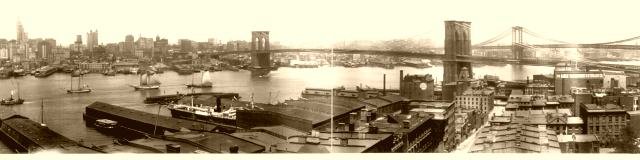
New York from Brooklyn Heights, c. 1911 — Library of Congress
The Lucchese family made its money from things that move: garments through the Manhattan garment district, freight through the Brooklyn piers, and cargo through the airport at Idlewild. For thirty years it did so with less public attention than any other New York family, and that was the point.
Before the name
The organisation predates the man it is named for. It grew out of the Reina family of the Bronx and East Harlem, passed to Tommy Gagliano after the Castellammarese War, and only became the Lucchese family in 1951 when Gaetano Lucchese succeeded him.
Gagliano held one of the five seats for twenty years and is close to invisible in the record, which was presumably the intention.
The garment district and the airport
Control of an industry is not the same as owning it, and the distinction is the whole business.
The family did not manufacture clothing. It controlled the trucking that moved cloth between cutters, sewers and showrooms, and it held influence in the unions those firms depended on. A manufacturer who wanted his goods to arrive dealt with the people who moved them. The same arrangement was later reproduced at the airport, where air freight offered the same choke point on a larger scale.
The Commission case
Anthony Corallo took the family in the early 1970s and continued the tradition until a microphone in his car ended it.
The recordings made in Corallo's Jaguar between 1983 and 1985 were central to the prosecution that convicted the heads of four families in November 1986. He was sentenced to a hundred years and died in custody in 2000.
After
What followed was the family's worst period. The leadership that emerged in the late 1980s produced an extraordinary number of murders and, in the end, an extraordinary number of cooperating witnesses, including men at the top of the organisation.
The family still exists and is still prosecuted. It has not resembled the quiet and highly profitable operation Lucchese ran for a long time.
The crew at the cab stand
The airport rackets had a street end, and for thirty years it ran out of Brownsville under a capo named Paul Vario.
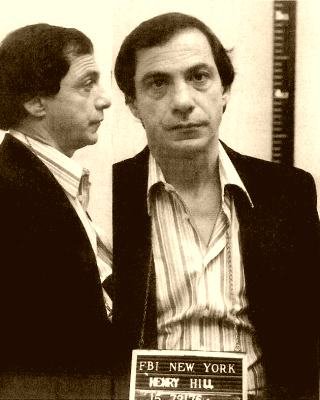
His crew is the best documented in the archive for an accidental reason: two of its earners, Henry Hill and James Burke, could never be inducted — Hill's father was Irish and Burke was Irish outright — and when the arrangement stopped working, Hill had no membership to forfeit by testifying. The robbery at the Lufthansa cargo building in December 1978 came out of this crew, as did the killings that followed it through 1979.
What the family lost there was not money. It was the first full account, given under oath by somebody who had been inside it since childhood, of how a crew actually turns a choke point into a weekly income.
Where it stands
The pattern of the last decade is small cases, quietly resolved. In January 2025 a Luchese soldier and four associates pleaded guilty in Brooklyn federal court to charges including racketeering, money laundering and illegal gambling.
The spelling in that court file is the government's — federal documents have used "Luchese" for years, while the family, the histories and this archive use the double C of Gaetano Lucchese's own name.
The rackets are recognisable from the family's best years, minus the industries that made them enormous. The garment district went overseas and the air freight went to companies with compliance departments. What is left is gambling and the money that moves through it.
The Commission 1950–1970
Boss
- Gaetano "Three-Finger Brown" Lucchese 1899–1967
Capo
- Paul "Paulie" Vario 1914–1988
The Decline 1970–1992
Boss
- Anthony "Tony Ducks" Corallo 1913–2000
Associate
- Henry Hill 1943–2012 Informant
- James "Jimmy the Gent" Burke 1931–1996
- Thomas "Tommy" DeSimone 1950–1979
Grouped by the period each man belonged to. A family's chart changes shape from one era to the next, and reading it as a single organisation is what makes it confusing.
Members
Sources
- Selwyn Raab — Five Families (2005)
- United States v. Salerno and others
- Southern District of New York (1986)
- President's Commission on Organized Crime report (1986)
- New York State Organized Crime Task Force reports
- United States Department of Justice press releases
- Eastern District of New York (2025)