Subject file
Carmine "Lilo" Galante
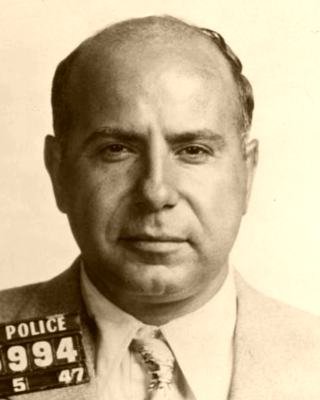
Known as LiloThe Cigar
Galante was released from federal prison in 1974, spent five years making himself the most feared man in New York, and was shot dead in a Brooklyn restaurant garden on 12 July 1979 with a cigar still in his mouth.
He had been Bonanno's underboss and had served twelve years of a twenty-year narcotics sentence. He came out into a family that had been fighting itself since 1964 and treated the vacancy as an invitation.
What made him a problem
Not brutality on its own — the record is full of brutal men who died old.
Galante's difficulty was that he was brutal, publicly ambitious, and running heroin at a scale the other families regarded as a liability at a moment when narcotics sentences were long enough to break anyone's silence. He was reported to have declared himself boss of bosses, a title that had not existed since 1931 and whose abolition was the entire point of the Commission.
The crime scene picture from Joe and Mary's Italian-American Restaurant ran in newspapers across the country and is one of the most reproduced images in the history of American organised crime.
This archive is not going to describe it further. It is a photograph of a man's body, taken minutes after he was killed, and its circulation says more about what the public wanted from the subject than about Galante.
After
Three men were charged decades later; the case against them for this killing did not produce a conviction at trial. What is documented is that the Commission had withdrawn its protection from him, and that nobody in a position to object did.
The Bonanno family did not recover its Commission seat for years, and within months of Galante's death an FBI agent named Joseph Pistone was six years into an undercover operation inside the same organisation.
Sources
- Selwyn Raab — Five Families (2005)
- New York City Police Department homicide records (1979)
- United States Bureau of Narcotics case files
- Federal Bureau of Investigation records released under the Freedom of Information Act