Film file
The Godfather
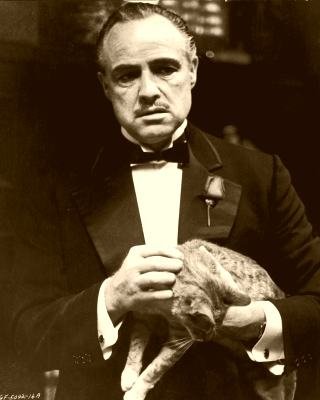
The Corleones never existed. Mario Puzo wrote the novel before he had met anyone in the life, working from newspaper files and his own invention, and the film follows him.
What the film gets right is not any particular event but the shape of the thing: the family as a business with a succession problem, the preference for arrangement over violence, and violence as the cost of a failed arrangement. Vito Corleone's manner — the quiet influence, the favours banked and called in — draws recognisably on Frank Costello, down to the voice. The 1946 meeting of the heads follows the logic of the real Commission.
Where it departs
Almost everywhere else. No family patriarch was ever offered a narcotics partnership in quite those terms, and the Commission's actual position on heroin was a commercial calculation about sentencing, not a moral one. The film's central proposition — that a man could refuse the drug trade and hold his position on principle — was not available to anyone in the period.
The larger distortion is one of tone. The film gives the organisation a dignity it did not possess, and a great deal of what followed in popular culture, including how members of the actual families came to speak about themselves, traces back to that choice.
Sources
- Mario Puzo — The Godfather (1969)
- Selwyn Raab — Five Families (2005)
- Francis Ford Coppola production notebook (published 2016)