Organisation file
The Chicago Outfit
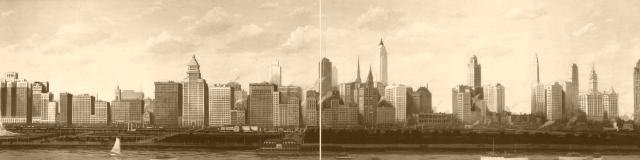
The Chicago skyline, c. 1927 — Library of Congress
Chicago never divided its underworld the way New York did. Where the east coast settled into five separate families, the city on the lake produced a single organisation, and the name that stuck to it was simply the Outfit.
Its line runs back to James Colosimo, a brothel operator who by 1910 controlled much of the vice trade on the South Side. Colosimo brought in Johnny Torrio from Brooklyn to help manage the business. Torrio in turn sent for a young bouncer named Alphonse Capone. When Prohibition arrived in 1920, Colosimo saw no reason to abandon a profitable trade for a risky new one, and Torrio saw every reason to take it. Colosimo was shot dead in his own café that May.
What Prohibition built
Torrio and Capone turned a vice operation into an industrial supplier of illegal beer, and the profits paid for something more durable than liquor: municipal protection. In Cicero the Outfit did not bribe the town government so much as staff it. That habit outlasted Prohibition and became the organisation's real inheritance.
After Capone went to prison in 1932 the leadership passed to Frank Nitti as the public face, with Paul Ricca and later Tony Accardo holding the substance of the power. Accardo's long tenure — he was never convicted of a serious charge — moved the Outfit into labour racketeering, gambling and, from the 1950s, a share of the Las Vegas casino skim.
The desert
The Outfit's most profitable arrangement was not in Chicago. Between 1974 and 1983 it held a hidden interest in Las Vegas casinos it could not legally own, shared with Kansas City, Milwaukee and Cleveland, and drew cash out of their counting rooms every week.
It ended the way most of this archive ends: not through a Nevada investigation but through a federal wiretap in Kansas City that recorded men dividing money from casinos two states away. Joseph Aiuppa and Jackie Cerone, who ran the Chicago end, were convicted in 1986. Tony Accardo, who was above them, was not charged.
The two men the arrangement is remembered through were neither of them members of the organisation in the way that mattered. Frank Rosenthal ran the buildings and could not be made. Anthony Spilotro, who could and was, drew the attention that made the whole thing visible, and was killed for it in 1986 along with his brother.
Where it stands
The Outfit's reckoning came in one trial rather than in a series. In 2007 the Family Secrets case in Chicago convicted its senior surviving leadership of racketeering that included eighteen murders going back to the 1970s, on the evidence of a member who had turned and of a son who testified against his own father.
What remains is prosecuted in ordinary pieces: gambling, extortion, video poker, the occasional labour case. The organisation has never had New York's five-family structure to lose, which is part of why it lasted so long and part of why what is left is so hard to describe.
Prohibition 1920–1933
Boss
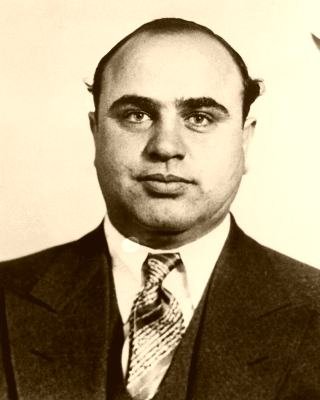
- Alphonse "Scarface" Capone 1899–1947
Underboss
- Frank "The Enforcer" Nitti 1886–1943
The Golden Age 1933–1950
Boss
- Tony "Joe Batters" Accardo 1906–1992
Capo
- Johnny "Handsome Johnny" Roselli 1905–1976
The Commission 1950–1970
Boss
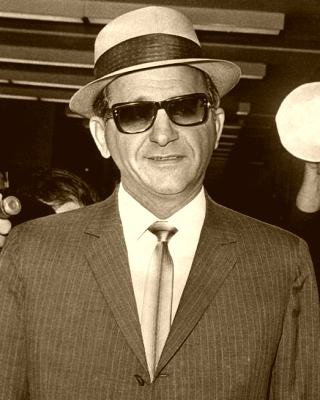
- Sam "Momo" Giancana 1908–1975
The Decline 1970–1992
Capo
- Anthony "The Ant" Spilotro 1938–1986
Associate
- Frank "Lefty" Rosenthal 1929–2008
Grouped by the period each man belonged to. A family's chart changes shape from one era to the next, and reading it as a single organisation is what makes it confusing.
Members
Stories
- The Counting Room Four crime families held a hidden interest in casinos they could not legally own, and took cash out of them for nine years. The arrangement was undone not by Las Vegas but by a telephone in Kansas City.
Sources
- John Kobler — Capone: The Life and World of Al Capone (1971)
- Gus Russo — The Outfit (2001)
- Chicago Crime Commission public records
- United States v. Calabrese and others
- Northern District of Illinois (2007)