Long read
The Counting Room
Four crime families held a hidden interest in casinos they could not legally own, and took cash out of them for nine years. The arrangement was undone not by Las Vegas but by a telephone in Kansas City.
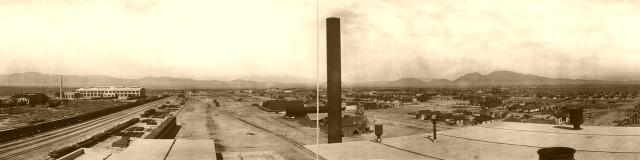
Las Vegas, Nevada, c. 1910 — Library of Congress
September 1983 · Las Vegas and Kansas City · The Decline
A casino counts its money in a locked room. Cash comes off the floor in boxes, the boxes are opened at a table, the contents are weighed and counted, and a number is written down. Everything the state knows about a casino's revenue begins with that number.
The skim is simply this: take the money before the number is written.
Why it needed four cities
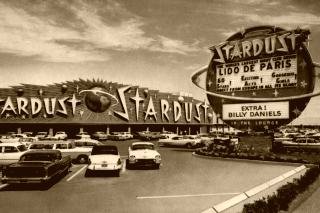
The casinos in question — principally the Stardust and the Fremont — were owned on paper by a San Diego property developer named Allen Glick, whose company had borrowed to buy them from the Teamsters' Central States Pension Fund.
The loan is the whole mechanism. Control of the pension fund's lending gave organised crime a say in who could buy a casino, and the price of the money was a hidden interest in the business. Kansas City had the closest relationship with the fund. Chicago had the size. Milwaukee and Cleveland had claims of their own. So the arrangement was divided between four organisations, none of which could appear anywhere in the paperwork.
What it took out
Estimates put the total between two and fifteen million dollars over the life of the arrangement, which is a range wide enough to be an admission that nobody knows. Untaxed cash leaves no ledger by design.
The telephone
Nothing in Las Vegas broke it. What broke it was a federal wiretap in Kansas City, placed in an entirely separate investigation, which recorded men discussing the division of money from casinos two states away.
Once the recordings existed, the rest followed as paperwork: a grand jury in Kansas City returned an indictment on 30 September 1983 against fifteen defendants; the trial ran in 1985; the convictions came in 1986.
Who paid
Joseph Aiuppa and Jackie Cerone of Chicago. Carl DeLuna of Kansas City. Milton Rockman of Cleveland. Frank Balistrieri of Milwaukee, who pleaded guilty. The leadership of four organisations, removed in one prosecution.
Tony Accardo, who was above all of it in Chicago, was not charged. Frank Rosenthal, who had run the buildings, was not charged either — Nevada had already taken his livelihood, and someone had already tried to kill him in a car park on Sahara Avenue.
What replaced it
The corporations. Not because the mob left and a vacuum opened, but because the prosecutions and a licensing regime with teeth made hidden ownership impossible, and public companies were the only buyers left who could satisfy it.
The skim did not end because Las Vegas cleaned itself up. Las Vegas was cleaned up by a wiretap in Missouri.
The file on them
- Frank "Lefty" Rosenthal Associate
- Anthony "The Ant" Spilotro Capo
- The Chicago Outfit Organisation
Sources
- United States v. DeLuna and others
- Western District of Missouri (1983–1986)
- United States v. Thomas
- Eighth Circuit Court of Appeals
- 759 F.2d 659 (1985)
- Nevada Gaming Commission records
- Nicholas Pileggi — Casino (1995)