Long read
The Apartment Above the Club
A social club everyone knew was watched, a flat upstairs that nobody thought about, and the eighteen months in which the most famous boss in America talked himself and his underboss into a federal courtroom.
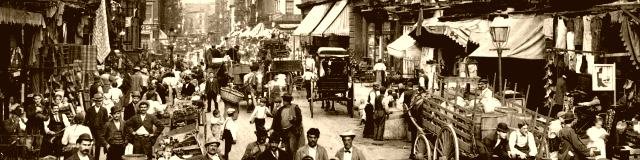
Mulberry Street, Little Italy, c. 1900 — Library of Congress
December 1990 · New York · The Decline
By 1988 the Ravenite Social Club on Mulberry Street was the most photographed address in organised crime. Agents sat on it, cameras covered the door, and the men who went in and out understood all of that perfectly well.
So they stopped talking inside. Gotti walked the pavement for conversations that mattered, which is a well-known counter-measure and a reasonably good one, and when the weather or the subject made the street impractical he went upstairs.
The flat
The apartment above the club belonged to the widow of a member of the family. It was not a meeting place, it was not swept, and it did not appear on any list of premises the men in the club treated as compromised. That is precisely what made it useful to them and, once the Bureau worked out where the conversations had gone, what made it useful to the Bureau.
The microphone went in. It recorded through 1989 and into 1990.
A recording of a soldier is evidence about a soldier. A recording of a boss explaining the structure of his family, the reasons for particular decisions and his assessment of the men who carry them out is something else: it is the organisation describing itself, in the voice the jury will hear, without an informant standing between the tape and the verdict.
December
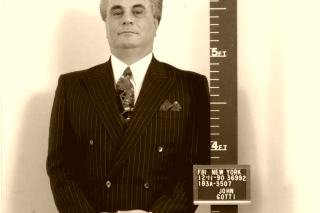
On the evening of 11 December 1990, agents took Gotti, Salvatore Gravano and Frank Locascio out of the club. The three were held together without bail.
Then the ordinary machinery of a federal prosecution did the rest. The recordings were disclosed to the defence, because they had to be. The defence included Gravano. And so the underboss of the Gambino family sat in custody and listened to his boss, in a room he had believed was private, discussing him.
The reading
What Gravano took from the tapes is his own account, given later under oath: he heard a case being built in which he was the man who had done everything, and the boss was the man who had been informed of it afterwards.
Whether that reading was fair is arguable and will stay arguable. What is not in dispute is what he did with it. He began cooperating in November 1991, and in March 1992 he testified.
What it cost
Gotti was convicted on 2 April 1992 on all thirteen counts and died in prison ten years later.
The broader cost is harder to put in a sentence. An organisation that had held together for sixty years on the understanding that made men do not testify watched its second-ranking member testify, survive it, and serve four years. The rule did not so much collapse as become a matter of individual judgement, and individual judgement is not a rule.
The file on them
- John "The Dapper Don" Gotti Boss
- Salvatore "Sammy the Bull" Gravano Underboss
- The Gambino Family Organisation
Sources
- United States v. Gotti
- Eastern District of New York (1992)
- Federal Bureau of Investigation Ravenite recordings (1988–1990)
- sworn trial testimony of Salvatore Gravano (1992)
- Selwyn Raab — Five Families (2005)