
Organisation file
The Gambino Family
New York from Brooklyn Heights, c. 1911 — Library of Congress
The organisation that took Carlo Gambino's name in 1957 had already been through three leaderships and two murders by the time he reached the top of it.
Its earliest recognisable form was the operation of Salvatore D'Aquila in the early 1920s. D'Aquila was shot dead in 1928. Leadership eventually settled on Vincent Mangano, who held it for two decades until he disappeared in 1951 — his body was never found. His underboss, Albert Anastasia, took over.
Anastasia and after
Anastasia had come up through the enforcement arm that newspapers labelled Murder, Incorporated, and his reputation for ordering killings on thin pretexts made him a liability to the other families. In October 1957 he was shot dead in a barber's chair in a Manhattan hotel.
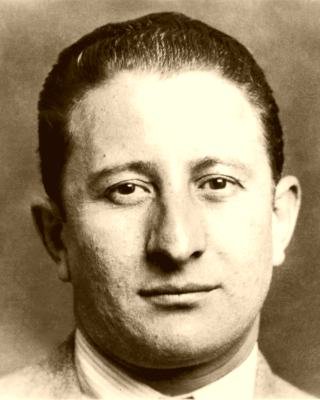
Carlo Gambino succeeded him and ran the family until his death from natural causes in 1976 — an ending rare enough in this line of work to be worth noting. Under Gambino the family avoided the narcotics trade that had destroyed Vito Genovese, concentrated on labour racketeering and cargo theft around the airports and docks, and grew into the largest of the five.
Two men and one family
Gambino's death in 1976 produced an arrangement rather than a successor. Paul Castellano, his cousin and brother-in-law, took the seat and the family's legitimate money — meat, poultry, construction. Aniello Dellacroce stayed underboss and kept the crews that did the traditional work.
It held for nine years because neither man could move without losing what the other supplied, and it ended inside a fortnight. Dellacroce died of cancer on 2 December 1985. Castellano, who had not attended the wake, was shot outside a midtown steakhouse on 16 December.
The visible years
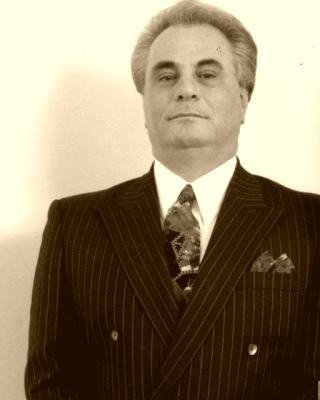
John Gotti had the family by the new year and ran it in a manner no American boss had attempted: court appearances treated as public occasions, a social club address that the press could find, three acquittals between 1986 and 1990 and a nickname earned on the strength of them.
The Federal Bureau of Investigation answered it from an apartment above the Ravenite Social Club. Gotti was convicted in April 1992 on his own recorded voice and the testimony of his underboss, Salvatore Gravano, and died in custody in 2002.
The family remained the largest in the country through all of it and is prosecuted still. What the six visible years cost it was the thing every predecessor had guarded: the assumption that the man at the top was not worth a prosecutor's full attention.
Where it stands
The family is still large enough to be charged in groups. In November 2023, in a case coordinated with Italian police, ten members and associates were arrested over an attempt to dominate the carting and demolition trades in New York, on charges including racketeering conspiracy, extortion and witness retaliation.
Seven of them, among them a captain and two soldiers, pleaded guilty to racketeering conspiracy in October 2025.
The industry is the same one Paul Castellano was working in 1985. What has gone is the visibility: the men in these indictments are named in court documents and nowhere else, which is how every boss before John Gotti would have preferred it.
The Commission 1950–1970
Boss
- Carlo "Don Carlo" Gambino 1902–1976
Underboss
- Aniello "Neil" Dellacroce 1914–1985
The Decline 1970–1992
Boss
- John "The Dapper Don" Gotti 1940–2002
- Paul "Big Paul" Castellano 1915–1985
Underboss
- Salvatore "Sammy the Bull" Gravano 1945– Informant
Grouped by the period each man belonged to. A family's chart changes shape from one era to the next, and reading it as a single organisation is what makes it confusing.
Members


Stories
- The Apartment Above the Club A social club everyone knew was watched, a flat upstairs that nobody thought about, and the eighteen months in which the most famous boss in America talked himself and his underboss into a federal courtroom.
- Six Weeks Before the Trial Paul Castellano was killed on a midtown pavement at rush hour without the Commission's approval, eleven months before the Commission itself went on trial. Both facts belong to the same story.
Sources
- Selwyn Raab — Five Families (2005)
- Federal Bureau of Investigation released case files
- New York State Commission of Investigation reports
- United States Department of Justice press releases
- Eastern District of New York (2023–2025)